Big-Bag

How to read wear marks on a multi-trip Big Bag

In the world of circular logistics, a multi-trip Big Bag (6:1 certified) travels, supports immense loads, is emptied and refilled. But like any veteran, it collects “scars” over time.

For a safety manager, being able to distinguish between a surface scratch and structural damage to the fabric is critical. An error in judgment can mean a sudden failure.

Woven polypropylene is like a skin: as long as the fibers are cohesive, the structure is indestructible. When the weave frays, the load-bearing capacity collapses exponentially.

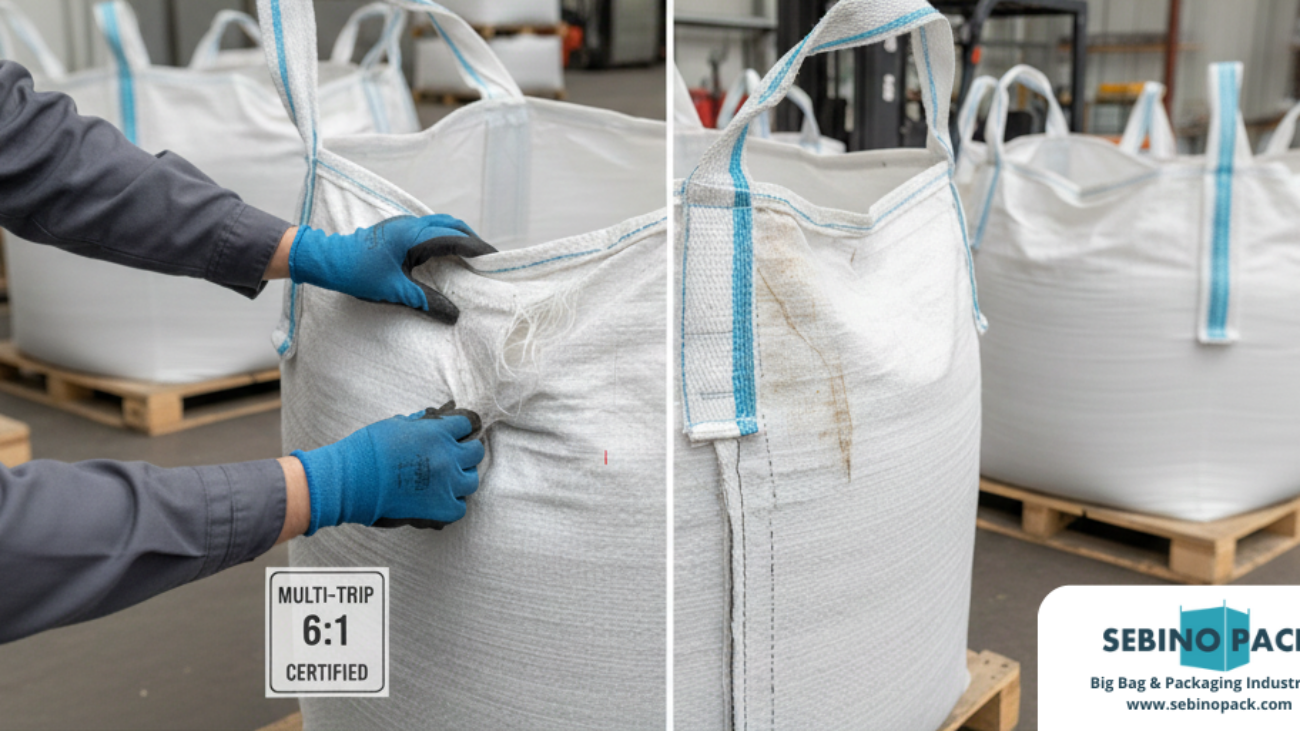
Big Bag often rubs against wooden pallets or container walls during handling. Therefore, it is worth checking for the presence of a slight fuzz on the surface of the fabric. If it is only“pilling” (small raised fibers) and the underlying weave is still firm and rigid, the bag is sound. This is a sign of aesthetic wear and tear that does not compromise the Safety Factor.

Another thing to check are the buttonholes: are there fraying at the base of the seam or sharp cuts at the edge of the strap? If you notice injuries, the bag can no longer guarantee stability. Never attempt to repair a buttonhole with handcrafted stitching.

Polypropylene is sensitive to prolonged sunlight, which alters its molecular structure, making it brittle: if the fabric appears faded, dry to the touch, or produces a white powder, there is little to be done. These signs indicate that the Big Bag has lost its elasticity.

If you notice cuts greater than 2-3 cm, or tears near a load-bearing seam the structural integrity is gone. Pressure from the internal material will widen the wound in seconds during the next lifting.

Before each reuse of a 6:1 Big Bag, also check these 4 points:

  1. Readable label: if the 6:1 factor label is torn or illegible, the bag should be downgraded or discarded (its history cannot be traced)
  2. Internal cleaning: residues from previous loads can contaminate or create chemical reactions that weaken polypropylene
  3. Bottom integrity: check the drain valve; it is the point that suffers the most stress during emptying
  4. No knots: loops should never be knotted to shorten them; knots reduce the strength of the strap by 50%

A SebinoPack multi-trip Big Bag is designed to last a long time, but its safety also depends on your observation skills. Treating your containers with respect and knowing how to read their signs of wear and tear is the best way to protect your goods and, more importantly, your employees.
Big-Bag

Big Bag vs. Floods: when packaging becomes a life-saving dike

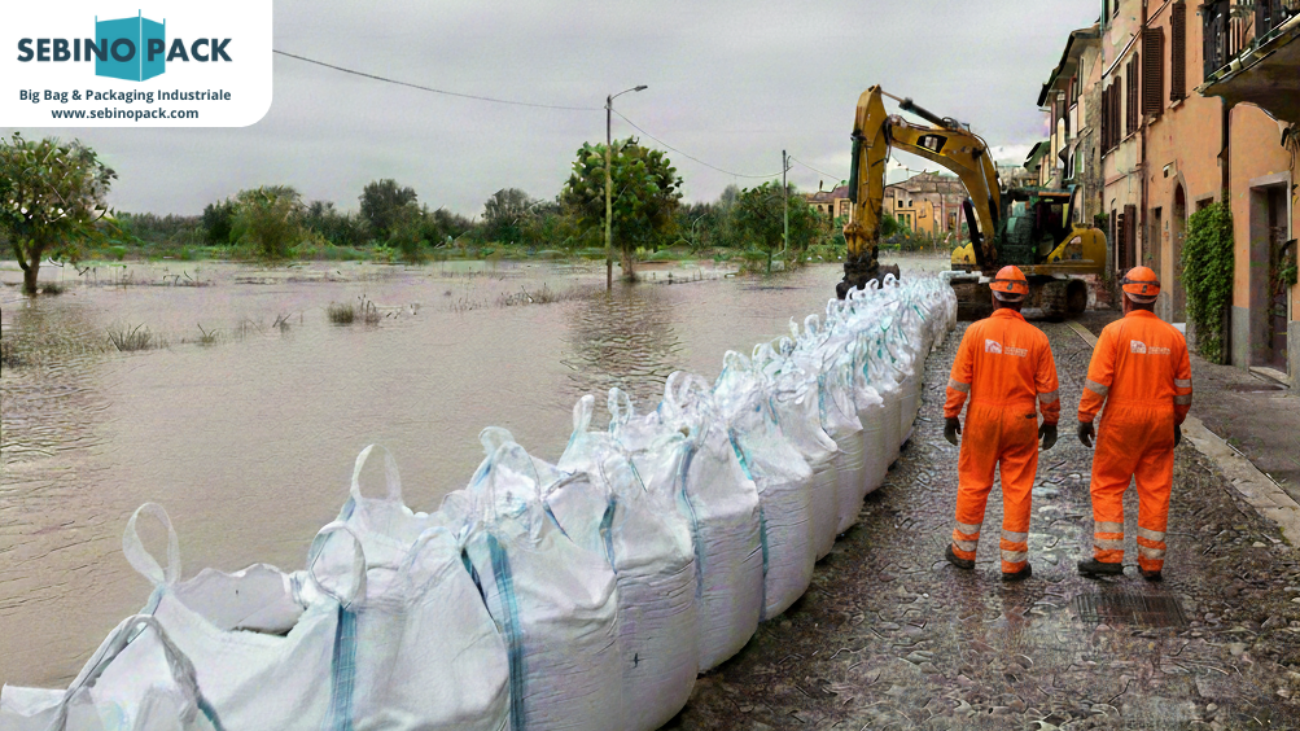
We are used to seeing Big Bags at construction sites or large logistics hubs, filled with polymers or grain. Yet in recent years, an “off-the-shelf” use has been spreading strongly: Big Bags as emergency flood barriers .

In civil defense scenarios, where every minute counts, the industrial container is transformed into a land defense tool. But why is a Big Bag often more effective than traditional sandbags? The answer lies in the fabric’s physics and operational speed.

For decades, the only defense against water has been small 20 kg sandbags, placed by hand one by one. A grueling job requiring hundreds of arms.

Today, the use of Big Bags can revolutionize the situation. A single Big Bag can hold up to 1,500 kg of sand or gravel. Placing it with an excavator is equivalent to laying 75 traditional bags in one go.

In addition, a Big Bag wall has immense inherent stability. With a square or rectangular base and a height of about one meter, they create a gravity dam that is difficult for even the strongest currents to move.

Not all bags are equal when it comes to stopping water. Resistance to hydrostatic pressure (the force that water exerts on the barrier walls) is critical. Water doesn’t just push down, it presses sideways. A poor quality Big Bag could “span” or give way under this push, compromising the dike.

Another advantage in prevention is space. Thousands of empty bags can be stored in a few pallets, ready to be distributed and filled on site with soil or debris taken directly from the emergency area.

Whether transporting chemicals or protecting a population center from flooding, the quality of polypropylene and precision weaving of SebinoPack solutions make the difference between success and failure.

Big-Bag

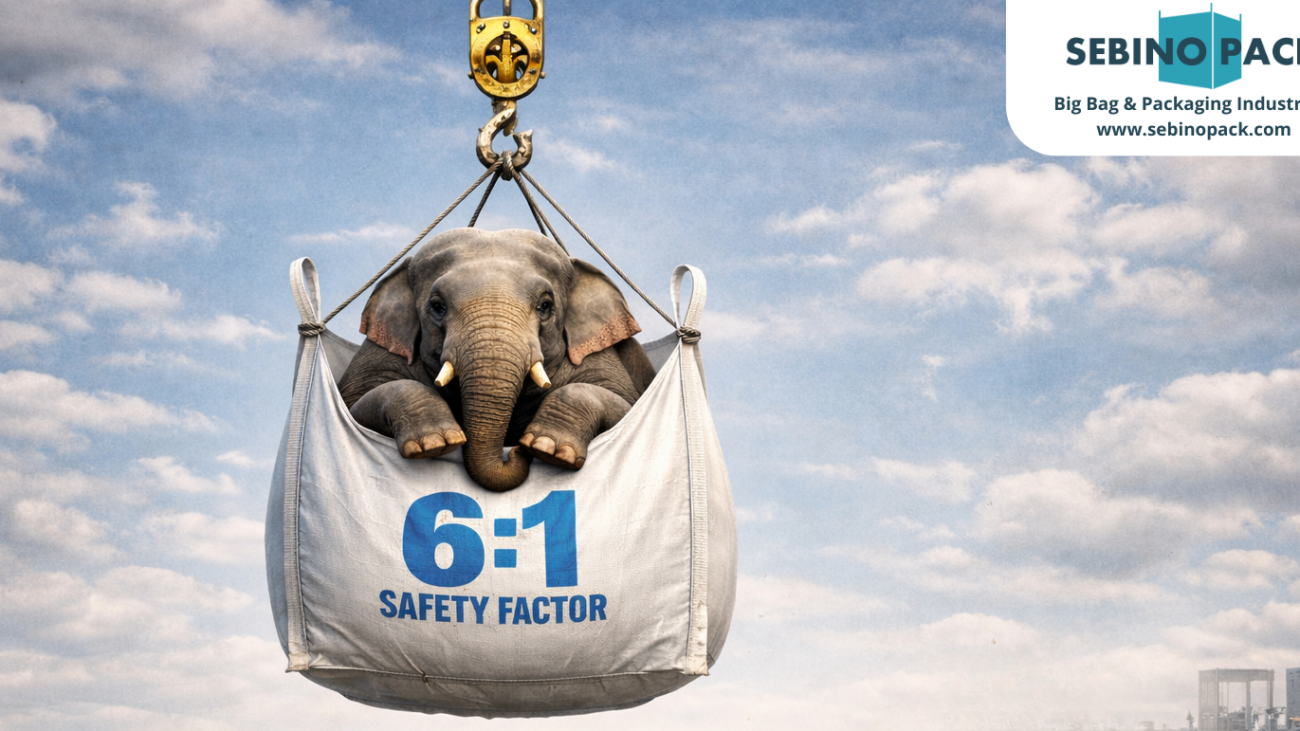
Lifting an elephant in a handkerchief: understanding the Safety Factor 6:1

Imagine having to cross a suspension bridge with your car. If the sign indicates a limit of 2 tons, would you feel safe knowing that the bridge was designed to collapse at exactly 2.1 tons? Probably not.

In the packaging industry, the principle is the same. When we talk about Big Bag(FIBC), the difference between carefree transportation and logistical disaster is all in one number: the Safety Factor (SF).

The safety factor is the ratio of the rated load capacity(SWL – Safe Working Load) to the maximum breaking strength of the bag during laboratory testing. The SWL is the maximum weight you can load into the Big Bag (e.g., 1,000 kg), while the 6:1 safety factor means that the bag is designed and tested to withstand up to 6 times its stated load before structurally failing.

Simply put: you are lifting an “elephant” of weight, but the polypropylene “handkerchief” that contains it has a hidden reserve of strength ready to handle any unforeseen contingency.

You might ask, “If I only load 1,000 kg, why do I need the bag to hold 6,000 kg?” The answer lies in the dynamics of the real world, quite different from the static conditions of a perfect warehouse:

  1. Dynamic stresses: when a forklift brakes sharply or hits a pothole, the load undergoes acceleration that instantly multiplies the force exerted on the slots
  2. Wear and reuse: while 5:1 bags are certified for single use (single-trip), Big Bags with a 6:1 factor are designed to be reusable (multi-trip). The more robust construction compensates for the natural, microscopic wear and tear that occurs with each emptying and filling cycle
  3. Psychological and economic peace of mind: a failure means not only loss of product, but downtime, potential work injuries, and insurance costs

Before arriving at your warehouses, a sample of SebinoPack Big Bag undergoes rigorous testing in certified test chambers:

  • Cyclic test: the bag is loaded and unloaded repeatedly to simulate future trips
  • Tensile test: the bag is pulled until final breakage. Only if breakage occurs beyond the 6,000 kg threshold (for a SWL of 1,000 kg) does the lot receive the 6:1 certification

At SebinoPack, security is not an optional extra, but a millimeter science. Knowing that your material is literally “impossible to lose” under standard loads allows you to focus on what really matters: growing your business.

Big-Bag

The steel web: the science behind the polypropylene weave of Big Bags

There is an engineering paradox that travels every day on thousands of trucks and cargo ships: a container that weighs just over 2 kg is capable of lifting and protecting over 2 tons of material. If we were to compare this proportion to the animal world, we would be close to the performance of spider silk.

But there is no magic behind this strength, but rather refined physics applied to polypropylene (PP). In this article we explore how the woven weave of a Big Bag can support up to 2,000 times its own weight.

It all starts at the molecular level. Polypropylene is a thermoplastic polymer characterized by high tensile strength. During the extrusion process, the material is stretched to align the molecular chains in a specific direction-this process dramatically increases the strength of the individual yarn (or “band”).

However, a band is fragile when taken individually. The real strength of a Big Bag comes, in fact, from its weaving. Most FIBCs use a circular frame technology, which creates a continuous tube of fabric without side seams.

In a circular weave, the warp (vertical) and weft (horizontal) threads work in synergy. When the bag is filled, the hydrostatic pressure of the inner material pushes outward. The weave distributes this force evenly over the entire surface, avoiding points of stress concentration that would lead to tearing.

Unlike steel, however, PP fabric has a slight elasticity. This allows the Big Bag to absorb dynamic shocks (such as during a sharp lift) without breaking.

Increasing the density of the yarns means increasing the number of“contact points” in the weave. The denser the weave, the smaller the sliding space between the threads, making the sack a truly flexible shell.

In SebinoPack, physics is put to the test in rupture tests. A Big Bag designed for 1,000 kg (5:1 standard) must be able to withstand a pressure of 5,000 kg before it fails. This margin of safety is guaranteed not only by the quality of the raw material, but by the precision with which the polypropylene strips are woven and sewn together.

A Big Bag is not a simple “plastic bag,” and at SebinoPack we know this well. In fact, for us, it represents the result ofcareful textile engineering, where the density of the yarn and the geometry of the weave create a structure capable of defying gravity. Choosing the correct weight means ensuring that your “web of steel” is perfectly calibrated for the value it must carry.

Big-Bag

Automation in Big Bag filling and emptying

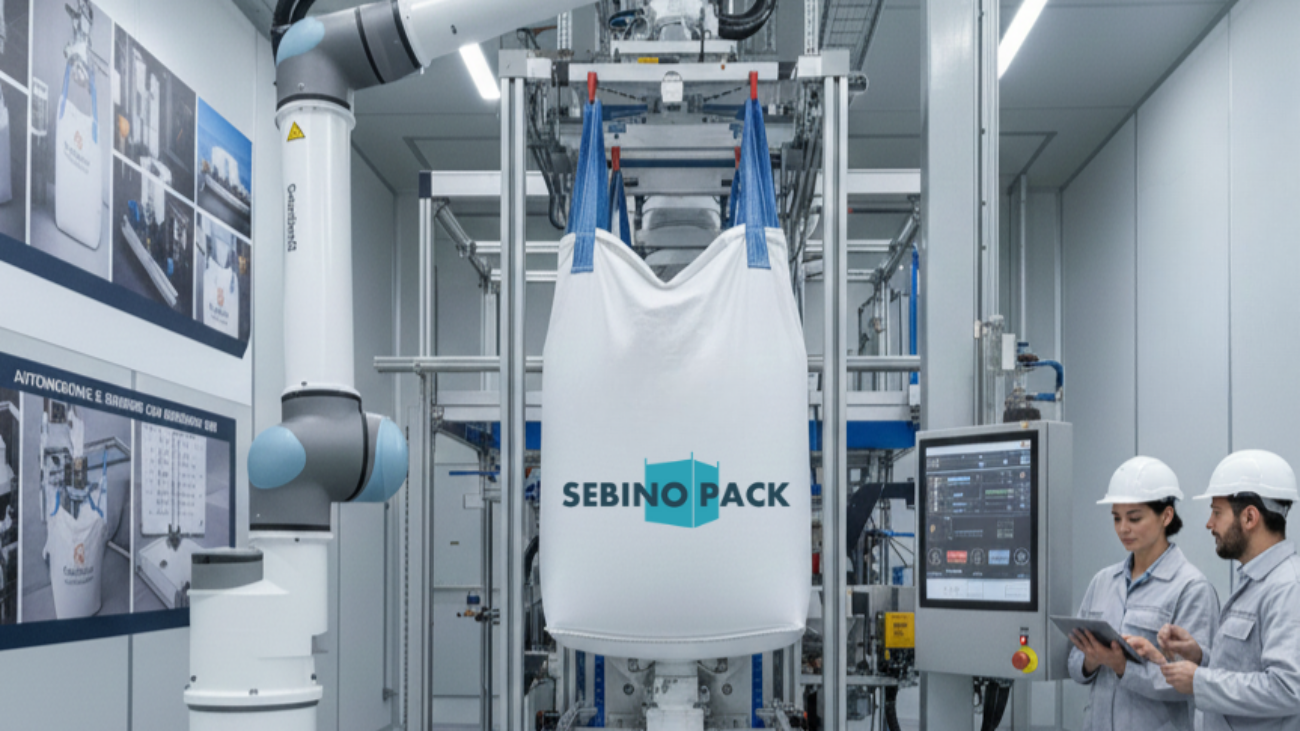
The integration of Industry 4.0 into logistics processes has made the Big Bag no longer a passive element, but a critical component of the automated cycle. It is estimated that more than 60 percent of large powder and granule production lines will adopt fully robotic loading and unloading stations in the coming year.

However, an excellent automation system can fail if the packaging is not designed to interface with the sensors and mechanical arms.

In a manual system, the operator can correct minor misalignments. In a robotic die, millimeter accuracy is critical: to facilitate the insertion of mechanical arms or automatic hooks, slots must maintain their shape even when the bag is empty.

In addition, dimensional tolerance becomes minimal. Each Big Bag must be identical to the previous one to ensure that the laser positioning sensors do not detect reading errors.

Another important aspect to consider is the discharge rate, which must be constant so as not to destabilize downstream processes. Therefore, the choice of Big Bag valve becomes an absolutely crucial factor.

The flat-bottom valve is ideal for full and fast unloading. In Industry 4.0, these valves are often equipped with pneumatically assisted opening systems. The candy (Rosette) closure , on the other hand, offers extra protection and superior flow regulation. It is the optimal choice when the Big Bag needs to be partially emptied automatically.

At SebinoPack, we design solutions that look to the future. In fact, our Big Bag range is already set up for fully automated flows:

  • High toughness materials to withstand intensive handling cycles
  • Safety certifications for human-computer interaction.
  • Technical advice to customize valves and slots to your specific robotic system

Automation does not tolerate setbacks. With SebinoPack, your plant technology finally finds a reliable ally in packaging: undeformable slots, dimensional accuracy, and valves designed for maximum efficiency.

Big-Bag

Innovative polymers for Big Bag: UV resistance and outdoor use

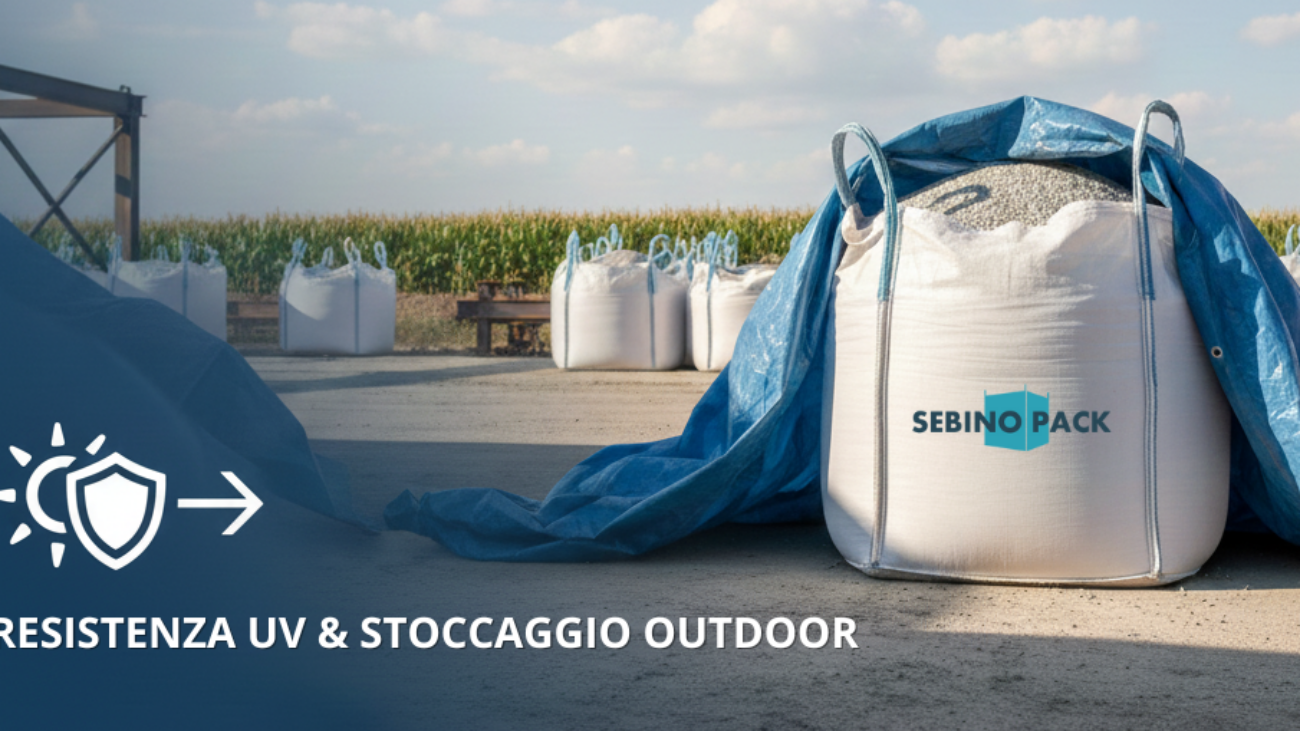
For those in the construction, mining, or agricultural sectors, the Big Bag is not just a container, but a storage garrison that often has to withstand months of sun, rain, and temperature fluctuations.

Polypropylene (PP), by its nature, is sensitive to ultraviolet rays: prolonged exposure without proper protection can lead to crystallization of the fibers, making the bag fragile and dangerous during handling.

UV degradation is a photo-chemical process. The sun’s rays break polymer chains in the fabric, causing loss of tensile strength, pulverization , and safety hazards.

At SebinoPack, we use state-of-the-artHALS (Hindered Amine Light Stabilizers) additives that not only screen out rays, but also block chemical degradation reactions as soon as they are triggered, prolonging the life of the bag by up to 50 percent more than cheap products.

In addition to material choice, proper bag management can really make a difference:

  1. Covering Big Bags with opaque tarps further reduces wear and tear
  2. Before lifting a bag that has been stored outdoors for months, always check that the color of the fabric is intact and has no “dry” or brittle areas
  3. Use FIFO (First-In-First-Out) logic to minimize the total exposure time.

Investing in a Big Bag with advanced UV stabilization means protecting not only the goods contained, but also the safety of your workforce. With SebinoPack technologies, outdoor storage stops being an unknown and becomes a controlled and safe process.

Big-Bag

How Q-Bag design reduces transportation costs

In the current landscape of unstable fuel costs and rising sea and land freight rates, logistics is no longer just an expense item, but akey opportunity to regain competitiveness.

It is often underestimated how the shape of a package can affect the entire value chain, but Q-Bags (stabilized Big Bags) are the ultimate solution for maximizing cargo volume and reducing costs.

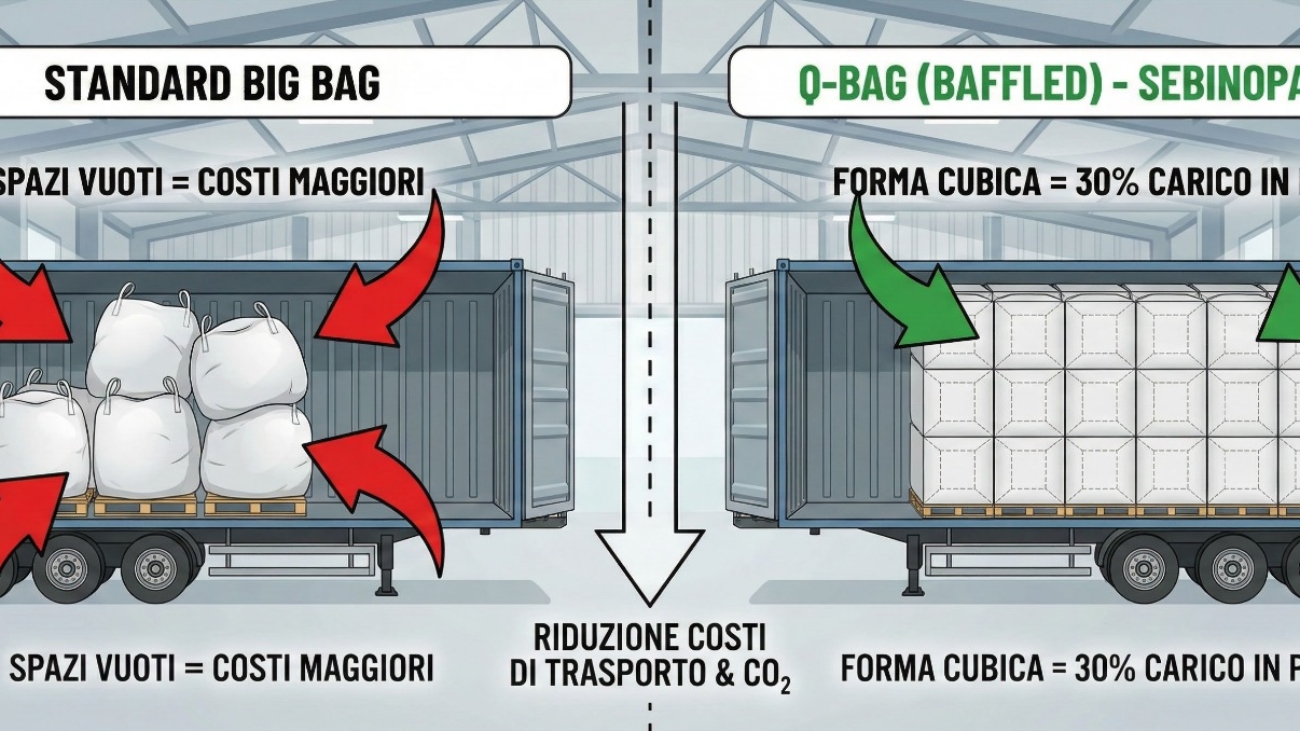
A standard Big Bag, when filled with granular or powdery materials, tends to span taking on a cylindrical or rounded shape. This phenomenon, creates two major inefficiencies: empty spaces and instability.

Q-Bags, on the other hand, are designed with aclever architecture. Inside the bag, reinforcing walls(baffles or baffles) are sewn into the corners. These baffles allow material to flow into the corners during filling and prevent the fabric from deforming outward. The result is a Big Bag that maintains a perfectly cubic shape even when fully loaded.

This allows up to 25-30% more material to be loaded into the same truck or container, and the more stable base allows bags to be stacked more securely, doubling or tripling the capacity of the warehouse without expanding its square footage.

Design optimization is not only good for the budget, but also good for the planet:

  • Reduction in the number of trips required to transport the same tonnage
  • Lower carbon footprint due to fewer vehicles on the road
  • Reduced risk of sagging or tipping during transport or storage

SebinoPack ‘s Q-Bags are distinguished by the precision of the internal seams, which ensure that the baffles do not collapse under the pressure of high-density materials. We also resize the bag to standard Euro-pallet orHigh Cube container sizes, ensuring that not an inch is wasted.

Big-Bag

UN-approved big bags for hazardous waste and asbestos: regulations, UN codes, and mistakes to avoid

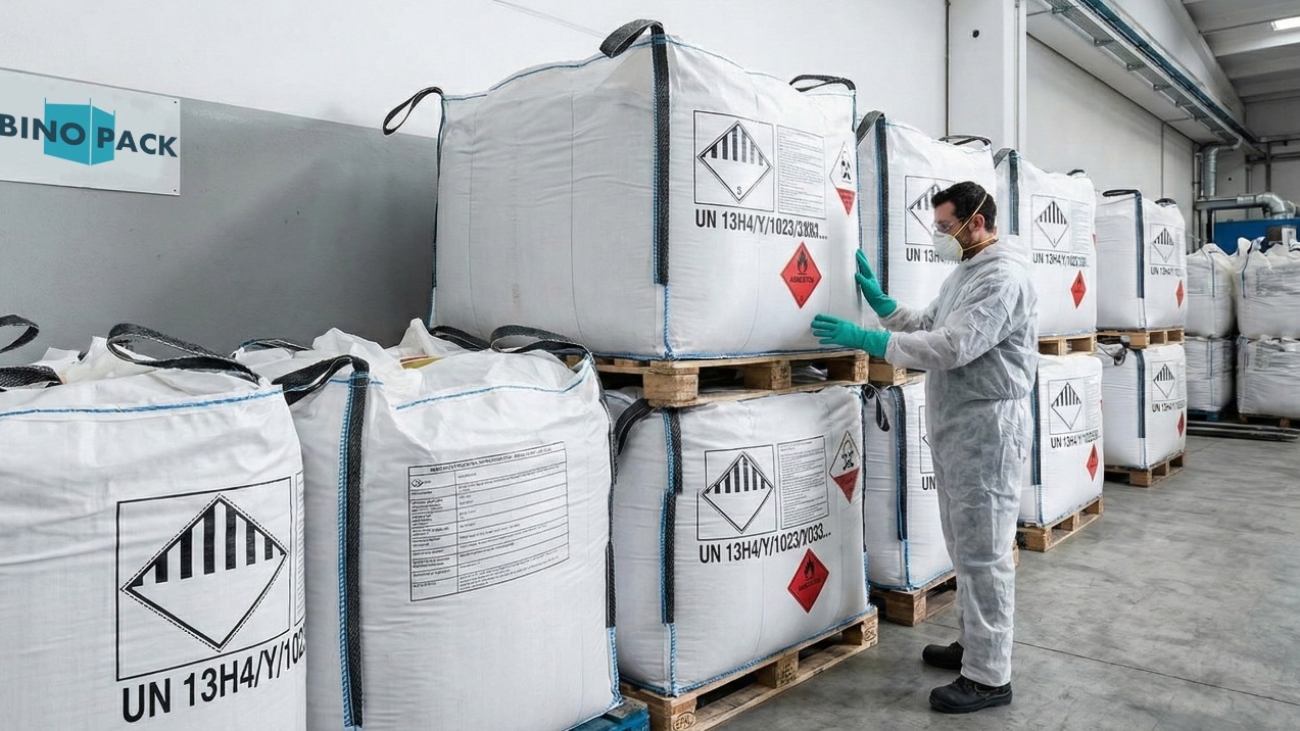
When it comes to hazardous waste, ADR, toxic-harmful waste or asbestos, a “sturdy” big bag is not enough. You need UN-approved packaging that is designed, tested and certified for the transport of dangerous goods according to the ADR regulations, RID, IMDG and the like.

UN-approved big bags (often identified as Dangerous Goods FIBCs) undergo specific tests for mechanical strength, drop, stacking, dynamics and tightness. Only after passing these tests can they bear the UN mark with all the required information: type of packaging, material, packaging group, year and country of manufacture, and certifying body.

In the field of waste, UN big bags are essential when the EWC code and classification of the waste make the substance a dangerous good for transportation purposes. Even more stringent is the case with asbestos: regulations require dedicated bags and big bags with clearly defined specifications for strength, closure, labeling and hazard symbology.

The most frequent errors found in business are:

  • Use of generic, unmarked UN big bags for waste that should travel in approved;
  • illegible or incomplete markings, exposing producer and transporter to penalties;
  • choice of bags with flow rates or safety factors that are not appropriate for the actual weight of the waste;
  • Incorrect outdoor storage, resulting in fabric degradation and loss of performance.

Working with a specialized supplier allows you to be guided in reading UN codes, verifying the ADR requirements of your waste stream, and choosing the right format (capacity, size, accessories). Sebino Pack can support both the waste producer and the environmental consultant in defining the correct UN big bag “familia” for the different types of waste handled.

Investing in approved packaging is not only a regulatory requirement, but a way to greatly reduce the risk of spills, loading/unloading accidents , and disputes with carriers and destination facilities.

Big-bag

Customizing Big Bags: printing, colors, logistics data, and user instructions for a more efficient supply chain

The big bag is not just a neutral container-it can become a tool for communication and efficiency throughout the supply chain. Customization through printing and accessories allows branding, information and security to be combined.

On an aesthetic level, the company logo, product line name, institutional colors or coordinated graphics can be printed. This helps reinforce the brand image, especially when the big bags are visible on the construction site, in the warehouse, or by the end customer. For companies that do contract work, customized big bags can also become an additional service for their customers.

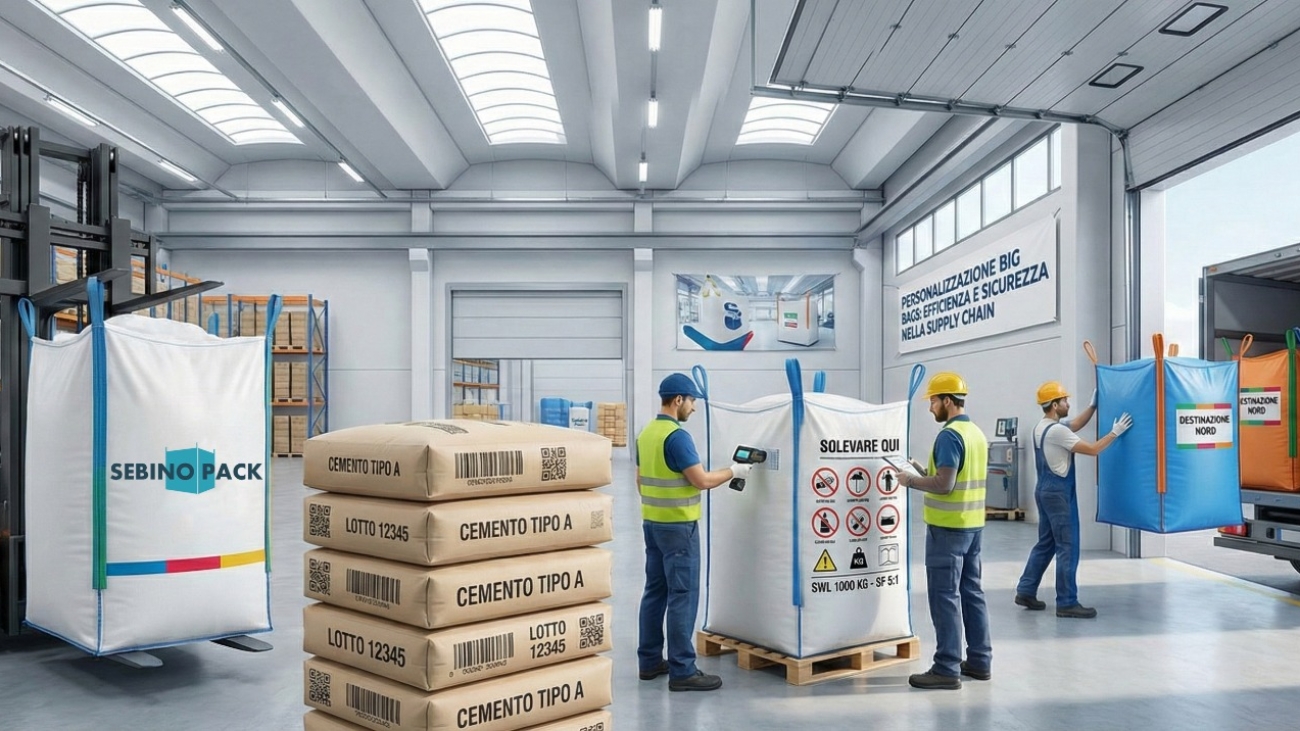
Operationally, the printout can contain key information: product codes, batches, bar codes or QR codes, safety pictograms, and lifting and storage instructions. Some companies choose to print capacity limits, safety factor and good usage practices directly on the bag, reducing the risk of errors in the department.

It is also possible to differentiate big bags by color or by graphic elements (side bands, colored seams) to quickly identify product families, risk classes, or destinations-an important advantage in warehouses with many different codes or in multilingual settings.

The graphic design of big bags requires a discussion between marketing department, logistics and supplier: format, number of colors, positioning of information, readability at a distance must be defined. Sebino Pack can support the company at this stage, preparing print proofs, color proofs and suggesting technical solutions to maximize graphic output without exploding costs.

A well-customized big bag simplifies the work of those who use it every day, reduces picking and shipping errors, improves the legibility of flows , and contributes to amore professional and consistentimage of the company.

Big-bag

Big Bag food grade: requirements, certifications and standards to know (BRC, HACCP, ISO 22000)

When a big bag comes into direct contact with food, it is no longer just industrial packaging: it becomes a MOCA(food contact material) and must meet very stringent requirements to ensure consumer safety.

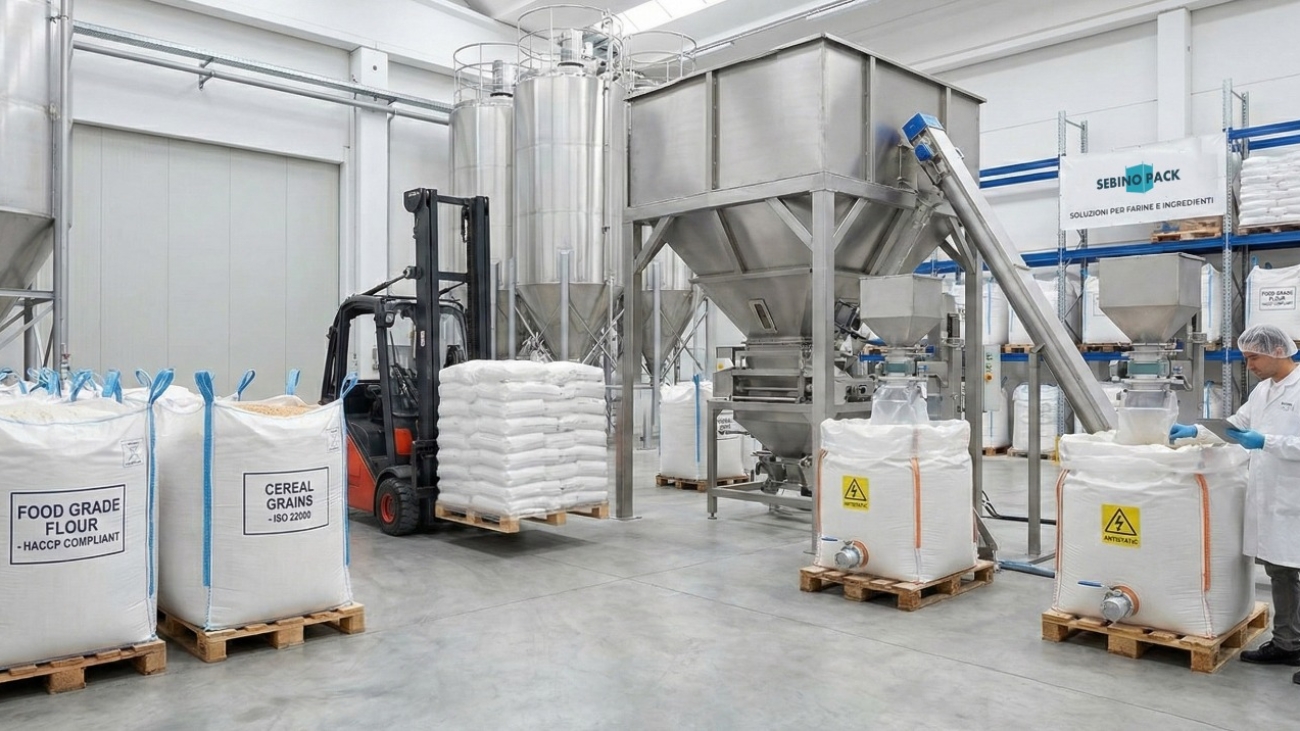
A food grade big bag is made from virgin polypropylene suitable for food contact, produced in plants that apply strict hygiene standards (cleaning, pest control, access management, cleaning and maintenance procedures). Production processes follow HACCP methodologies, identifying critical points and defining specific controls to prevent physical, chemical or microbiological contamination.

At the regulatory level, in Europe the general reference is Regulation (EC) 1935/2004 on materials in contact with foodstuffs, flanked by specific provisions for plastics (such as Reg. (EU) 10/2011). To these are added voluntary standards, but in fact required by large industry, such as BRCGS, FSSC 22000, ISO 22000, IFS, SQF: certifications that attest to the structured management of food safety throughout the packaging supply chain.

A food grade big bag must be designed to minimize the release of substances from the material to the food: for this, global and specific migration tests are conducted under simulated conditions of use. Traceability is critical: each batch of bags must be able to be linked to the source materials, tests performed, and production conditions.

From the customer’s perspective, choosing a certified supplier means reducing the risk of noncompliance in audits, product recalls and disputes. It is important to ask:

  • Certificates of fitness for food contact;
  • List of standards/certifications of the production facility;
  • Summary reports of migration testing;
  • Foreign body and complaint handling procedures.

Sebino Pack, as a partner for the food industry, can select certified production facilities, ensure proper documentation for audits, and help clients define technical specifications for their food grade big bags.