Big-Bag

Big Bag below zero: the resilience of polymers in the ice inferno

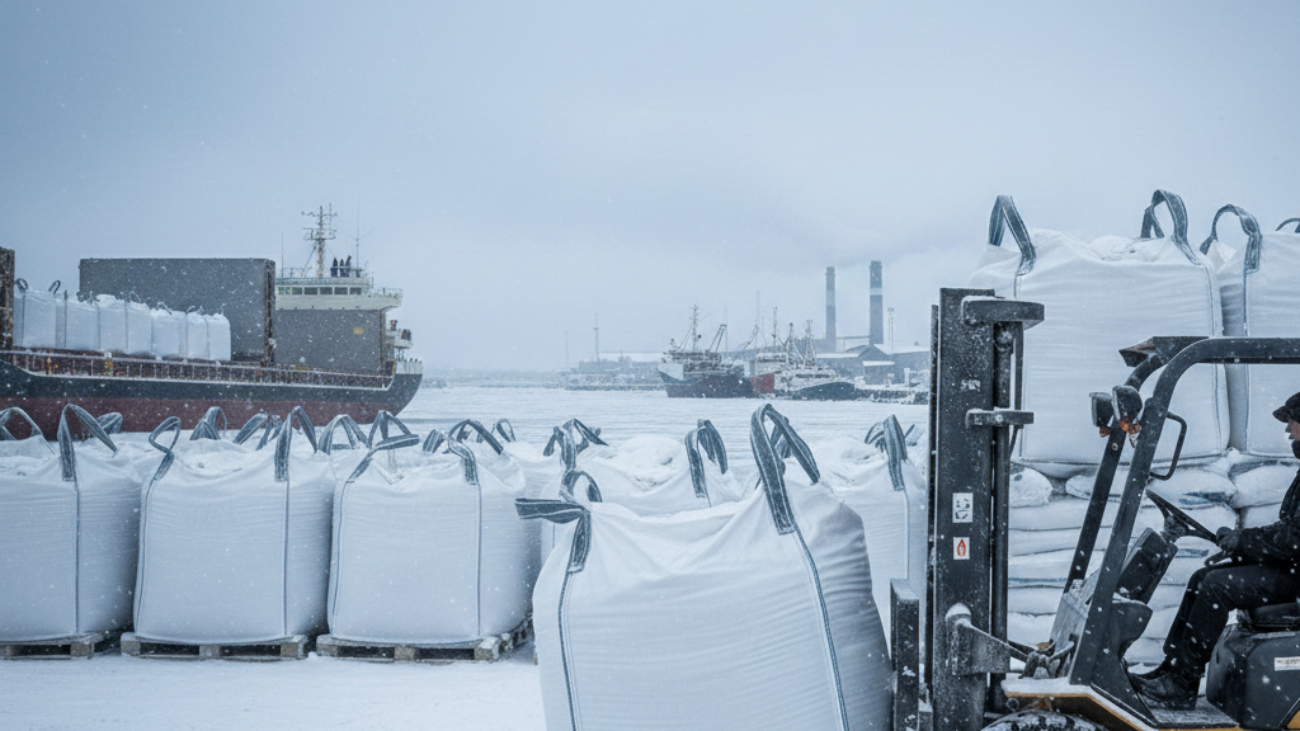
Imagine a northern European port in the middle of winter. The thermometer reads -30°C and everything seems immobilized by frost. In this extreme scenario, thousands of tons of goods rest inside Big Bags (FIBCs) stacked in yards or ship holds.

At these temperatures, the physics of materials changes the rules of the game. If the container is not up to the task, the risk is not only logistical, but safety.

The threat of cold: when plastic becomes glass.

Most plastics react to low temperatures with a definite physical phenomenon: the glass transition. When the cold falls below a certain critical threshold, the molecular chains of polymers lose their ability to flow over each other.

The result? A usually flexible material becomes brittle and crystalline. Under these conditions:

  • Accidental impact with a forklift can cause instant cracks.
  • Lifting slots, when subjected to tension, are likely to break sharply instead of extending.
  • The fabric may “shatter” during emptying operations.

Why virgin raw material makes a difference

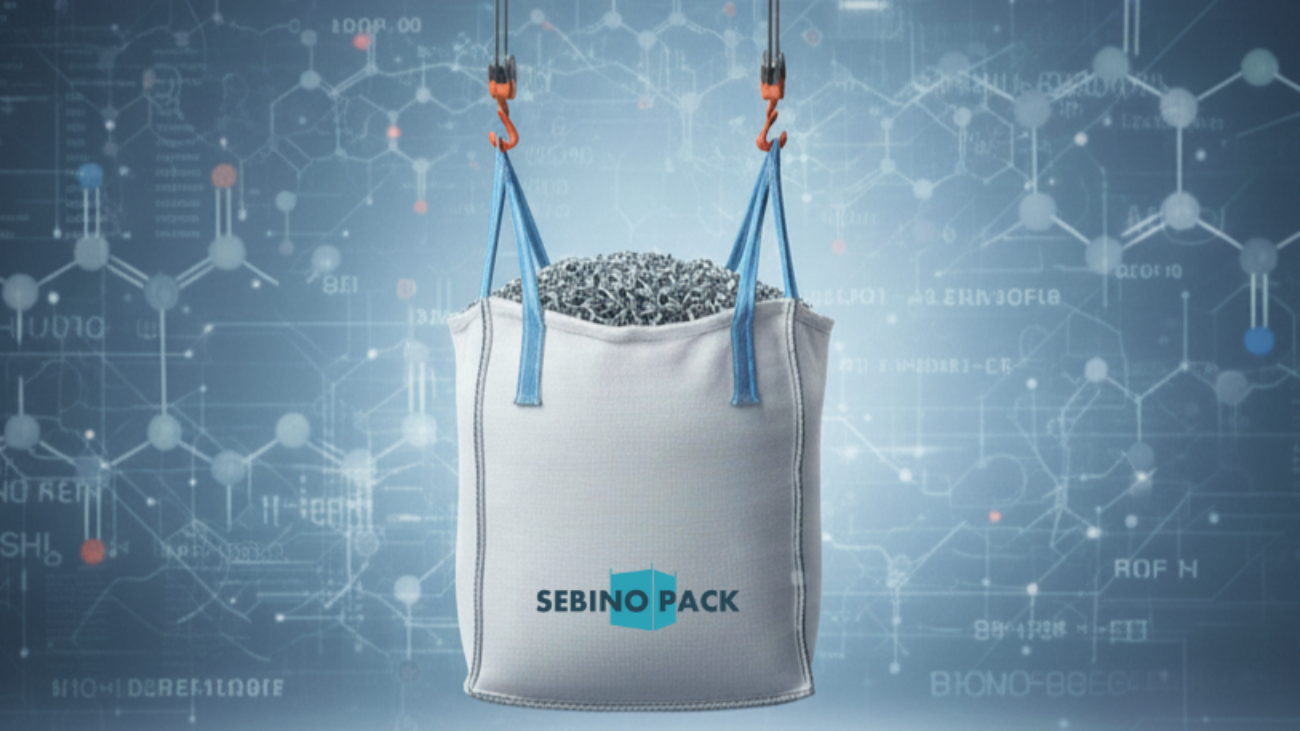
At SebinoPack, we know that the key to ensuring that a Big Bag survives the ice inferno lies in the quality of the polypropylene (PP) and additives used.

  1. Polymer purity: the use of virgin raw material ensures a uniform molecular structure. Unlike low-quality recycled plastics, which may contain impurities or degraded polymer chains, virgin polymer retains its toughness even at prohibitive temperatures.
  2. Structural flexibility: the fibers in our Big Bags are designed to retain a certain degree of elasticity. Even at -30°C, the fabric must be able to absorb mechanical stress without reaching the breaking point.
  3. Resistance to thermal cycling: the real danger is not just constant cold, but temperature change. The transition from the heat of production or a heated warehouse to outside frost puts a strain on the fiber. Only a high-quality fabric avoids micro-cracking from heat shock.

Safety beyond critical limits

Analyzing the thermal resistance of fibers is not just a technical exercise; it is a guarantee of operational continuity. Choosing a certified Big Bag made from high-grade polymers means:

  • Zero spillage: avoid product spillage due to frozen fabric breakage.
  • Operator safety: eliminate the risk of structural failure during lifting.
  • Global reliability: being able to ship anywhere from the Siberian steppes to Scandinavian ports without worry.

If your supply chain involves storage or transit in severe weather areas, don’t take the tightness of your packaging for granted. The quality of the material is the only barrier between your goods and disaster from frost.
Big-Bags

Big Bag’s “shark skin”: coatings to defy abrasion

In industrial packaging, strength is not just a matter of weight, but of surface area. When the load consists of extreme materials, the container must evolve to survive.

The internal attack: when content becomes the enemy

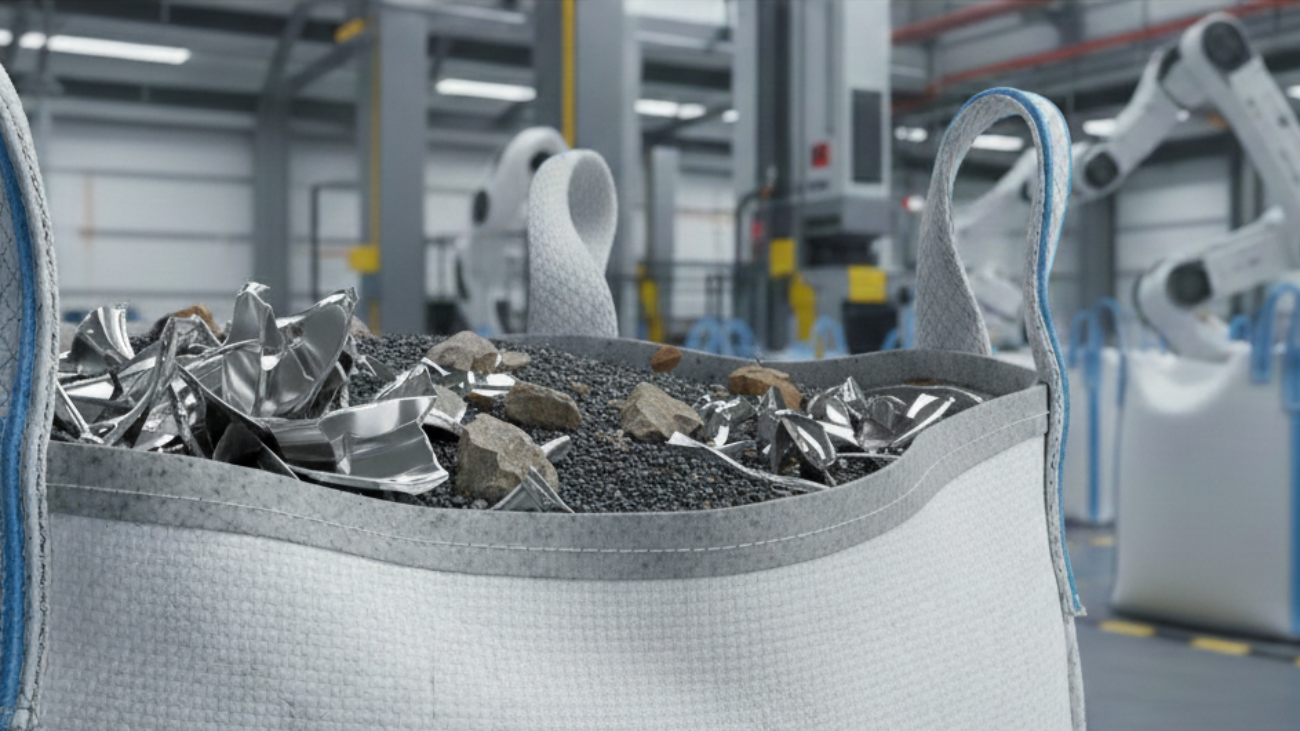
Transporting sharp ores or scrap metal subjects the Big Bag to constant internal attack. Any movement during transport or lifting creates friction that can compromise the integrity of the traditional polypropylene fabric. Without proper protection, these micro-abrasions quickly turn into critical holes.

Lamination (coating) as a protective shield

To counteract this wear and tear, FIBCs’ technology offers lamination (or coating), a true “shark skin” applied to the fabric.

This technical membrane is not just an aesthetic layer, but a functional barrier that offers crucial benefits:

  • Abrasion resistance: dramatically reduces wear and tear caused by continuous contact with rough materials.
  • Puncture protection: prevents sharp edges and metal fragments from piercing the supporting structure of the bag.
  • Total containment: seals the porosity of the fabric, protecting the contents from spillage, even in the case of fine dust from rubbing materials.

Safety beyond the load

The integrity of the coating does more than just preserve the goods. The “sharkskin” is a fundamental guarantee of workplace safety. A Big Bag that suddenly gives way due to internal abrasion is an immediate hazard to the operator. Choosing an appropriate lining means preventing potential hazards during handling and storage.

When to choose a laminated Big Bag?

We recommend the adoption of this technology in the presence of:

  1. Scrap metal: with sharp edges and irregular shapes.
  2. Minerals and aggregates: heavy materials with high coefficient of friction.
  3. Granular chemicals: where the slightest puncture would pose environmental or contamination risks.

At SebinoPack, we analyze the nature of your material to recommend the right “skin” for your logistical challenges. Don’t let abrasion become the weak point in your supply chain.

Big-Bag

The Achilles of the Big Bag: why the real strength lies in the seams

It is often said that a chain is only as strong as its weakest link. In the world of industrial packaging, and particularly FIBCs (Flexible Intermediate Bulk Containers), that link is the seams.

You could invest in the strongest polypropylene fabric on the market, with the highest grammage and the most advanced anti-UV treatment, but if the thread in the seams gives way or the assembly technique is inadequate, the load is irretrievably lost.

The chain: not just a thread, but an armature

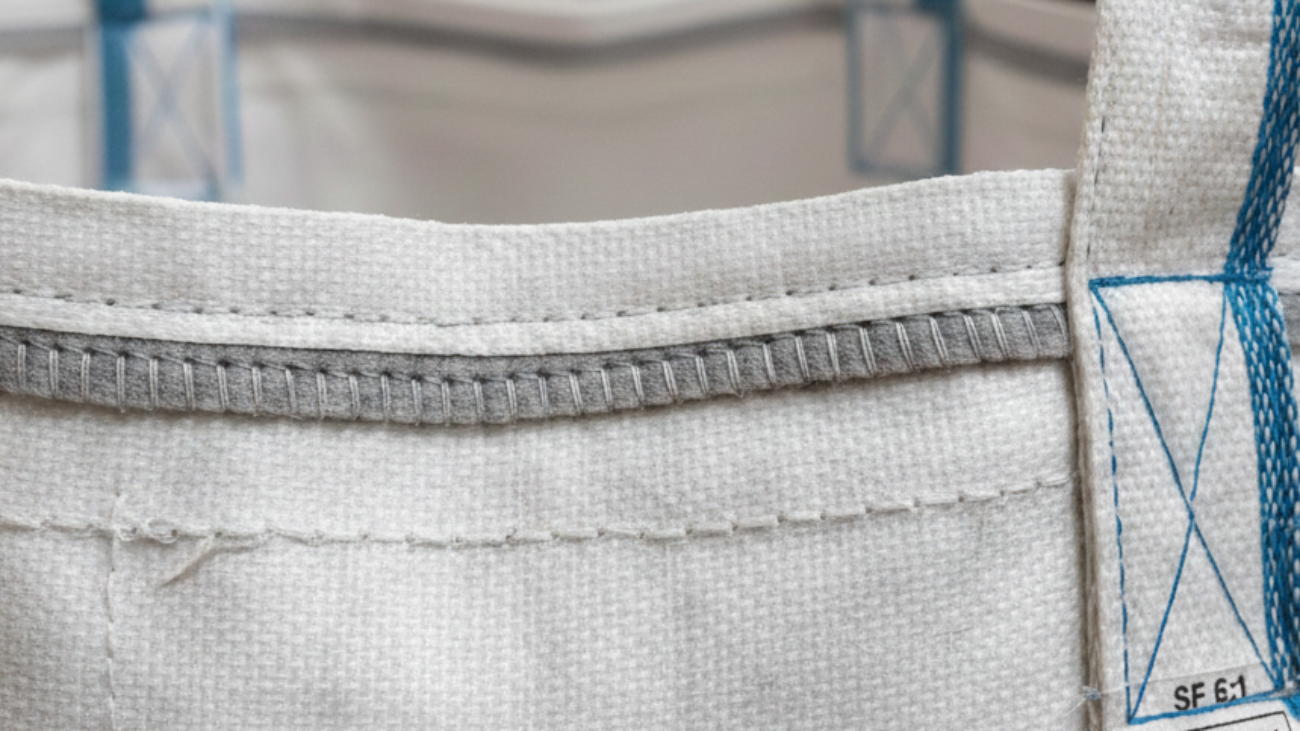
Most Big Bags are assembled using what is known as chain stitching. This method is not chosen at random: its geometric structure allows the thread to “work” together with the fabric during the tension stages, providing an elasticity that a standard seam would not have.

However, the quality of the wire is crucial. Poor-quality wire can undergo thermal stress during production or chemically degrade in contact with certain products, turning what should be a strength into the breaking point (the “Achilles”) of the entire bag.

Dust protectors: when detail makes a difference

In addition to mechanical sealing, there is the challenge of product sealing. For very fine powders (such as calcium carbonate, flours, or pigments), simply sewing leaves micro-holes from which the product can leak (so-called sifting).

This is where the dust felts come in. These additional “bindings” are inserted along the seam lines to seal off any possible escape routes. There are different levels of protection:

  • Single felt: for standard powders.
  • Double or triple felt: for extremely volatile materials.
  • Drawstring seams (filler cord): for total hermetic sealing.

Identify critical mechanical stress points

During lifting, dynamic forces are not evenly distributed. As packaging experts, we constantly monitor three critical areas:

  1. The suspender attachment: this is the point of maximum pull. The seam here must penetrate several layers of reinforced fabric. A failure at this point is the main cause of serious accidents.
  2. The bottom of the bag: during filling, the weight weighs vertically on the base seams. If the Big Bag is intended for dense products, the choice of a “U” or “flat bottom” seam can make a difference.
  3. Vertical edges: when the bag inflates (“belly” effect), the side seams experience constant radial pressure.

Always check the Safety Factor (SF) of your Big Bag. A 5:1 (disposable) or 6:1 (reusable) ratio depends not only on the fabric, but on the ability of the seams to withstand extreme load tests.

Underestimating thread quality or sewing technique means putting your company’s logistics and security at risk. At SebinoPack, we believe that excellence lies in taking care of these invisible details. A Big Bag must not only contain, it must protect and resist.

Big-Bag

Big Bags vs. rigid silos: why flexibility is the key to cutting costs

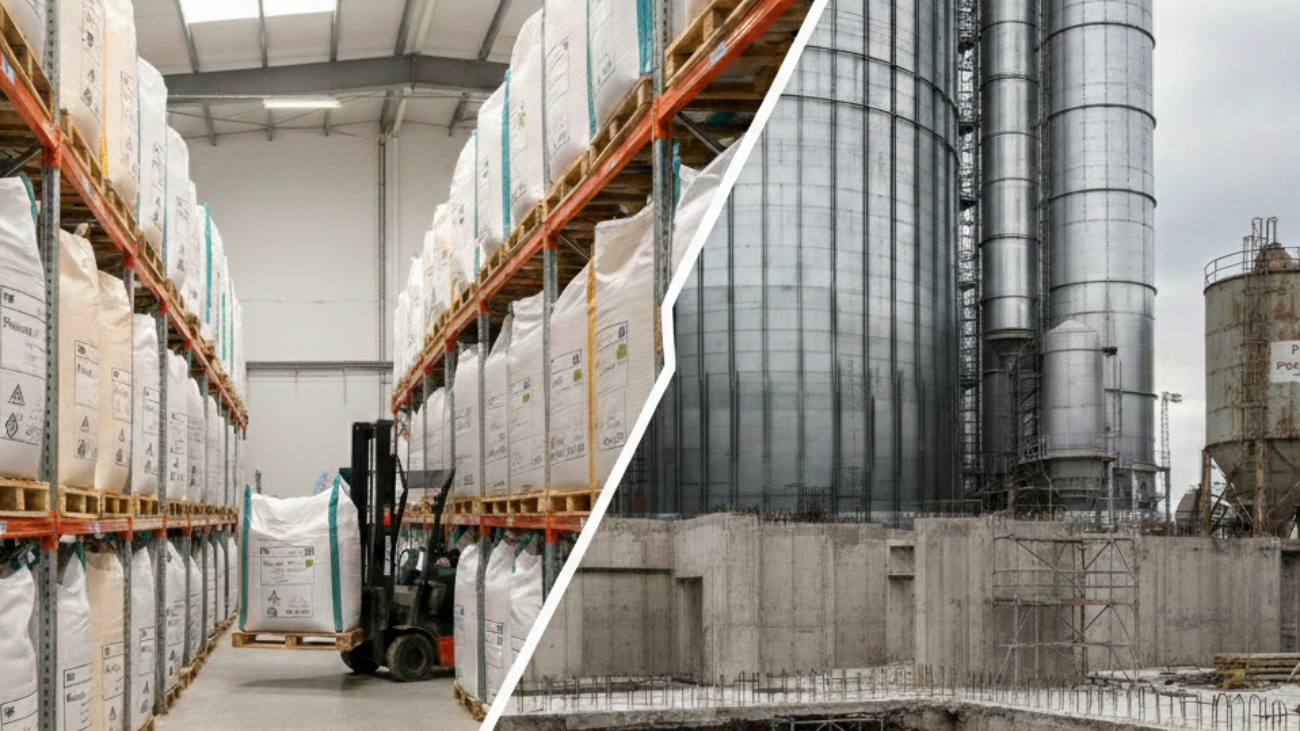
In the material handling industry, one of the most critical strategic decisions concerns the storage system. Many companies, driven by a traditional view, immediately consider installing rigid silos. However, a thorough analysis of investment costs (CAPEX) and operational needs reveals that this choice can turn into a structural and economic limitation.

CAPEX and speed of implementation: an unequal comparison

The installation of a fixed silo requires a very high initial investment (CAPEX). In addition to the cost of the structure itself, civil works (concrete foundations), pneumatic loading/unloading facilities and, last but not least, building permits and red tape must be considered.

In contrast, storage in Big Bags allows you to scale up your warehouse capacity in a matter of days. No foundations or special permits are needed; all that is needed is covered space and efficient logistics management. This turns a fixed cost into a variable operating model.

Multi-product management and operational agility

The main limitation of a silo is its rigidity: a silo is designed for a specific product. If the company decides to diversify production or test new raw materials, the silo becomes a constraint.

Big Bags offer agile multi-product management:

  • Dozens of different references can be stored in the same warehouse.
  • It is possible to vary the volumes of each individual product according to seasonality or market demands.
  • The warehouse adapts to the business, and not vice versa.

Farewell to “Cross-Contamination”

For companies that process food, chemical or pharmaceutical powders, cross-contamination is enemy number one. Fully cleaning a silo to go from one batch to another is costly, time-consuming, and often does not guarantee absolute sterility.

By using Big Bags, the risk of cross-contamination between different batches is virtually eliminated. Each batch remains isolated in its own bag from origin to final destination. Once emptied, the bag can be disposed of or recycled, eliminating the need for complex plant wash cycles.

Boundless scalability

What happens if your production doubles in six months? With silos, you would be forced to plan new excavations and new structural purchases. With Big Bags, the solution is immediate: just order a larger supply of bags and reorganize your racking or storage areas.

This “on-demand” scalability allows companies to respond to market peaks without exposing themselves to financial risks associated with infrastructure that may remain unused in the future.

SebinoPack supports companies in transitioning to more efficient packaging and storage systems. Although silos may make sense for massive, single-product production, the flexibility of Big Bags is today’s strongest competitive advantage for lowering costs and increasing business responsiveness.

Big-Bag

Big bag wear: how to read the signs of multi-trips

In the world of circular logistics, a multi-trip Big Bag (6:1 certified) travels, supports immense loads, is emptied and refilled. But like any veteran, it collects “scars” over time.

For a safety manager, being able to distinguish between a surface scratch and structural damage to the fabric is critical. An error in judgment can mean a sudden failure.

Woven polypropylene is like a skin: as long as the fibers are cohesive, the structure is indestructible. When the weave frays, the load-bearing capacity collapses exponentially.

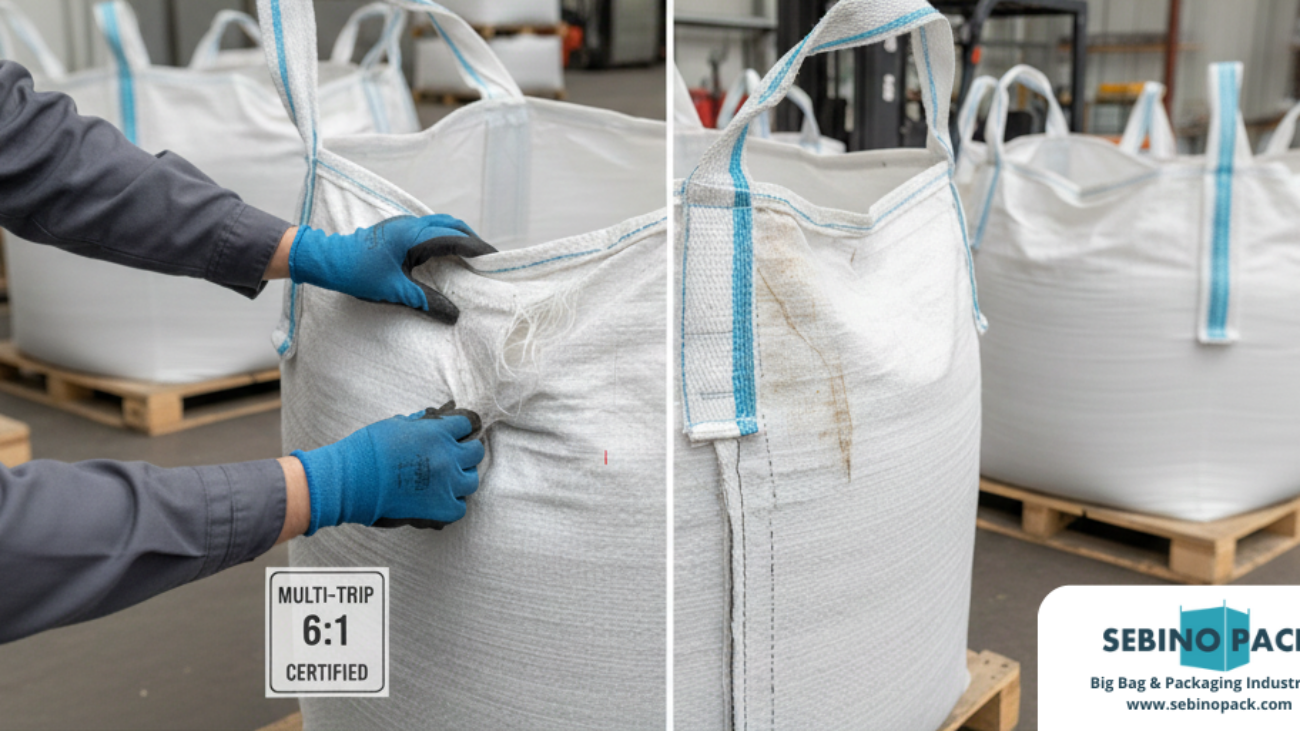
Big Bag often rubs against wooden pallets or container walls during handling. Therefore, it is worth checking for the presence of a slight fuzz on the surface of the fabric. If it is only“pilling” (small raised fibers) and the underlying weave is still firm and rigid, the bag is sound. This is a sign of aesthetic wear and tear that does not compromise the Safety Factor.

Another thing to check are the buttonholes: are there fraying at the base of the seam or sharp cuts at the edge of the strap? If you notice injuries, the bag can no longer guarantee stability. Never attempt to repair a buttonhole with handcrafted stitching.

Polypropylene is sensitive to prolonged sunlight, which alters its molecular structure, making it brittle: if the fabric appears faded, dry to the touch, or produces a white powder, there is little to be done. These signs indicate that the Big Bag has lost its elasticity.

If you notice cuts greater than 2-3 cm, or tears near a load-bearing seam the structural integrity is gone. Pressure from the internal material will widen the wound in seconds during the next lifting.

Before each reuse of a 6:1 Big Bag, also check these 4 points:

  1. Readable label: if the 6:1 factor label is torn or illegible, the bag should be downgraded or discarded (its history cannot be traced)
  2. Internal cleaning: residues from previous loads can contaminate or create chemical reactions that weaken polypropylene
  3. Bottom integrity: check the drain valve; it is the point that suffers the most stress during emptying
  4. No knots: loops should never be knotted to shorten them; knots reduce the strength of the strap by 50%

A SebinoPack multi-trip Big Bag is designed to last a long time, but its safety also depends on your observation skills. Treating your containers with respect and knowing how to read their signs of wear and tear is the best way to protect your goods and, more importantly, your employees.

Big-Bag

Big bags vs. floods: when packaging becomes a life-saving levee

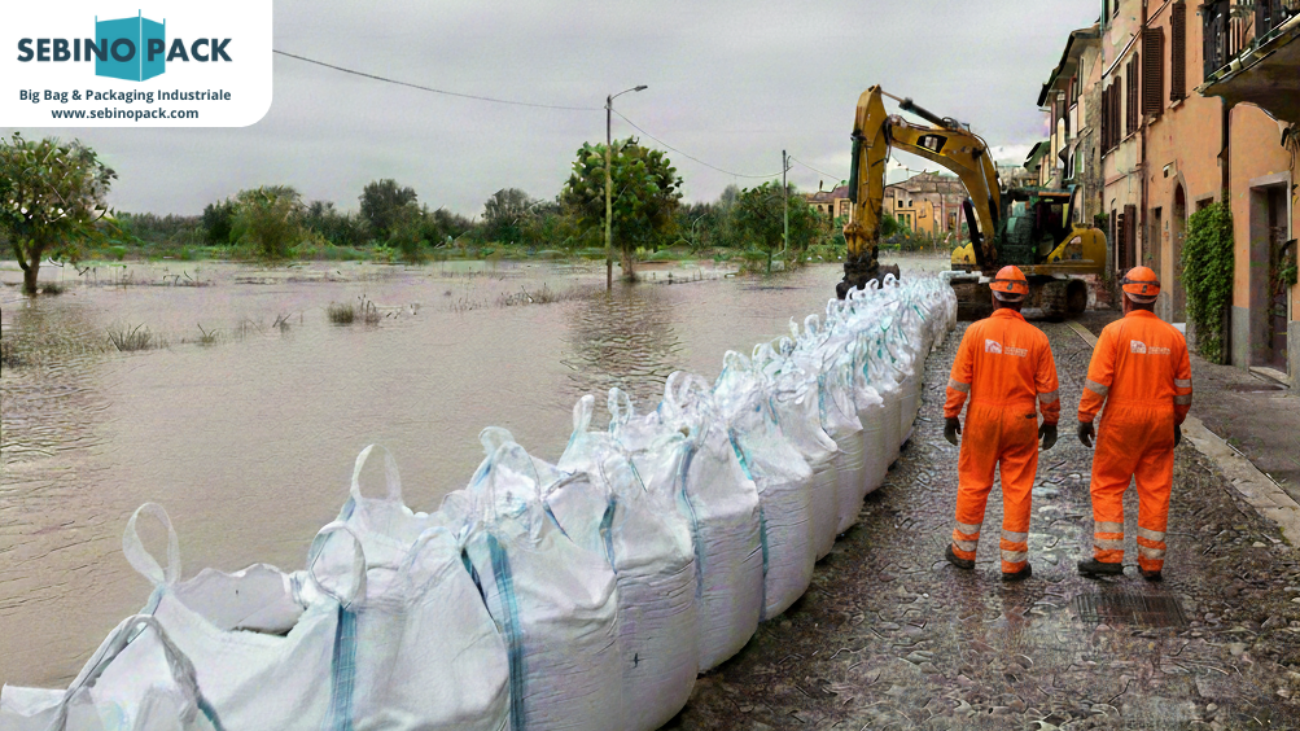
We are used to seeing Big Bags at construction sites or large logistics hubs, filled with polymers or grain. Yet in recent years, an “off-the-shelf” use has been spreading strongly: Big Bags as emergency flood barriers .

In civil defense scenarios, where every minute counts, the industrial container is transformed into a land defense tool. But why is a Big Bag often more effective than traditional sandbags? The answer lies in the fabric’s physics and operational speed.

For decades, the only defense against water has been small 20 kg sandbags, placed by hand one by one. A grueling job requiring hundreds of arms.

Today, the use of Big Bags can revolutionize the situation. A single Big Bag can hold up to 1,500 kg of sand or gravel. Placing it with an excavator is equivalent to laying 75 traditional bags in one go.

In addition, a Big Bag wall has immense inherent stability. With a square or rectangular base and a height of about one meter, they create a gravity dam that is difficult for even the strongest currents to move.

Not all bags are equal when it comes to stopping water. Resistance to hydrostatic pressure (the force that water exerts on the barrier walls) is critical. Water doesn’t just push down, it presses sideways. A poor quality Big Bag could “span” or give way under this push, compromising the dike.

Another advantage in prevention is space. Thousands of empty bags can be stored in a few pallets, ready to be distributed and filled on site with soil or debris taken directly from the emergency area.

Whether transporting chemicals or protecting a population center from flooding, the quality of polypropylene and precision weaving of SebinoPack solutions make the difference between success and failure.

Big-Bag

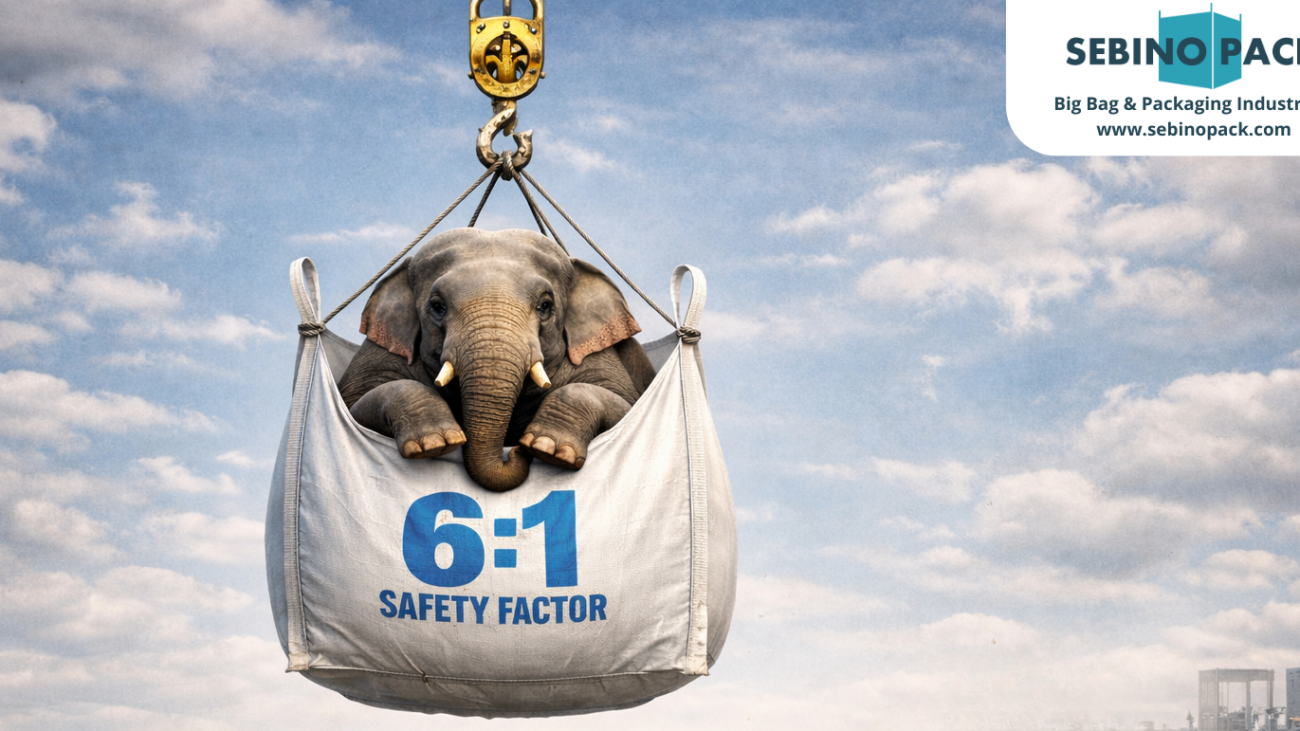
Lifting an elephant in a handkerchief: understanding the Safety Factor 6:1

Imagine having to cross a suspension bridge with your car. If the sign indicates a limit of 2 tons, would you feel safe knowing that the bridge was designed to collapse at exactly 2.1 tons? Probably not.

In the packaging industry, the principle is the same. When we talk about Big Bag(FIBC), the difference between carefree transportation and logistical disaster is all in one number: the Safety Factor (SF).

The safety factor is the ratio of the rated load capacity(SWL – Safe Working Load) to the maximum breaking strength of the bag during laboratory testing. The SWL is the maximum weight you can load into the Big Bag (e.g., 1,000 kg), while the 6:1 safety factor means that the bag is designed and tested to withstand up to 6 times its stated load before structurally failing.

Simply put: you are lifting an “elephant” of weight, but the polypropylene “handkerchief” that contains it has a hidden reserve of strength ready to handle any unforeseen contingency.

You might ask, “If I only load 1,000 kg, why do I need the bag to hold 6,000 kg?” The answer lies in the dynamics of the real world, quite different from the static conditions of a perfect warehouse:

  1. Dynamic stresses: when a forklift brakes sharply or hits a pothole, the load undergoes acceleration that instantly multiplies the force exerted on the slots
  2. Wear and reuse: while 5:1 bags are certified for single use (single-trip), Big Bags with a 6:1 factor are designed to be reusable (multi-trip). The more robust construction compensates for the natural, microscopic wear and tear that occurs with each emptying and filling cycle
  3. Psychological and economic peace of mind: a failure means not only loss of product, but downtime, potential work injuries, and insurance costs

Before arriving at your warehouses, a sample of SebinoPack Big Bag undergoes rigorous testing in certified test chambers:

  • Cyclic test: the bag is loaded and unloaded repeatedly to simulate future trips
  • Tensile test: the bag is pulled until final breakage. Only if breakage occurs beyond the 6,000 kg threshold (for a SWL of 1,000 kg) does the lot receive the 6:1 certification

At SebinoPack, security is not an optional extra, but a millimeter science. Knowing that your material is literally “impossible to lose” under standard loads allows you to focus on what really matters: growing your business.

Big-Bag

The steel web: the science behind the polypropylene weave of Big Bags

There is an engineering paradox that travels every day on thousands of trucks and cargo ships: a container that weighs just over 2 kg is capable of lifting and protecting over 2 tons of material. If we were to compare this proportion to the animal world, we would be close to the performance of spider silk.

But there is no magic behind this strength, but rather refined physics applied to polypropylene (PP). In this article we explore how the woven weave of a Big Bag can support up to 2,000 times its own weight.

It all starts at the molecular level. Polypropylene is a thermoplastic polymer characterized by high tensile strength. During the extrusion process, the material is stretched to align the molecular chains in a specific direction-this process dramatically increases the strength of the individual yarn (or “band”).

However, a band is fragile when taken individually. The real strength of a Big Bag comes, in fact, from its weaving. Most FIBCs use a circular frame technology, which creates a continuous tube of fabric without side seams.

In a circular weave, the warp (vertical) and weft (horizontal) threads work in synergy. When the bag is filled, the hydrostatic pressure of the inner material pushes outward. The weave distributes this force evenly over the entire surface, avoiding points of stress concentration that would lead to tearing.

Unlike steel, however, PP fabric has a slight elasticity. This allows the Big Bag to absorb dynamic shocks (such as during a sharp lift) without breaking.

Increasing the density of the yarns means increasing the number of“contact points” in the weave. The denser the weave, the smaller the sliding space between the threads, making the sack a truly flexible shell.

In SebinoPack, physics is put to the test in rupture tests. A Big Bag designed for 1,000 kg (5:1 standard) must be able to withstand a pressure of 5,000 kg before it fails. This margin of safety is guaranteed not only by the quality of the raw material, but by the precision with which the polypropylene strips are woven and sewn together.

A Big Bag is not a simple “plastic bag,” and at SebinoPack we know this well. In fact, for us, it represents the result ofcareful textile engineering, where the density of the yarn and the geometry of the weave create a structure capable of defying gravity. Choosing the correct weight means ensuring that your “web of steel” is perfectly calibrated for the value it must carry.

Big-Bag

Automation in Big Bag filling and emptying

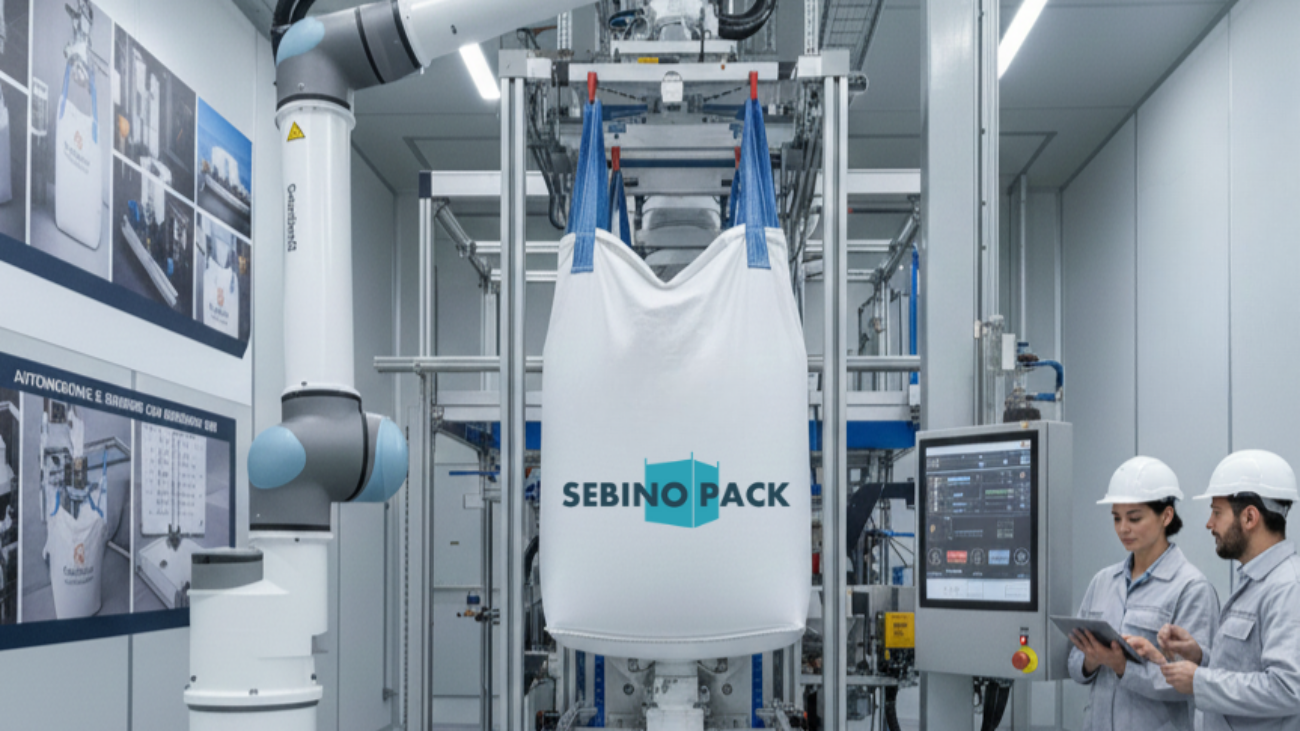
The integration of Industry 4.0 into logistics processes has transformed the flexible container from a passive element to a critical component of the automated cycle. The statistics speak for themselves: it is estimated that more than 60 percent of large powder and granule production lines will adopt fully robotic Big Bag filling and emptying stations by next year.

However, even the most advanced automation system can fail if the packaging is not designed to interface properly with sensors and mechanical arms.

Millimeter accuracy in automated loading

In a manual system, the operator can correct minor misalignments. In a robotic die, accuracy is the key requirement. To facilitate Big Bag filling operations using mechanical arms or automatic hooks, the slots must maintain their shape and position even when the bag is empty.

In addition, dimensional tolerance becomes minimal: each bag must be identical to the previous one. This ensures that the laser positioning sensors do not detect reading errors, avoiding costly downtime.

Big Bag emptying: choosing the right valve

The discharge rate must be constant so as not to destabilize downstream production processes. In the design of a Big Bag emptying system, the bottom configuration therefore becomes a determining factor:

  • Flat-bottom valve: Ideal for full and fast unloading. In Industry 4.0, these solutions are often integrated with pneumatically assisted opening systems.
  • Candy Closure (Rosette): Provides extra protection and superior flow regulation. It is the optimal choice when the process involves partial and automatic emptying of contents.

SebinoPack solutions for automation

At SebinoPack, we design packaging solutions that look to the future of logistics. Our range is engineered to optimize fully automated flows through:

  1. High-tenacity materials: Designed to withstand intensive handling cycles without deformation.
  2. Undeformable eyelets: Designed to stay in place, making it easier for automatic loaders to engage.
  3. Customized configurations: Technical advice to customize valves and inlets to the specifications of your robotic system.

Automation does not tolerate the unexpected. With SebinoPack, your plant technology finds a reliable ally: dimensional accuracy and valves designed for maximum efficiency in Big Bag filling and emptying.